 English
Views: 0 Author: Site Editor Publish Time: 2025-12-30 Origin: Site


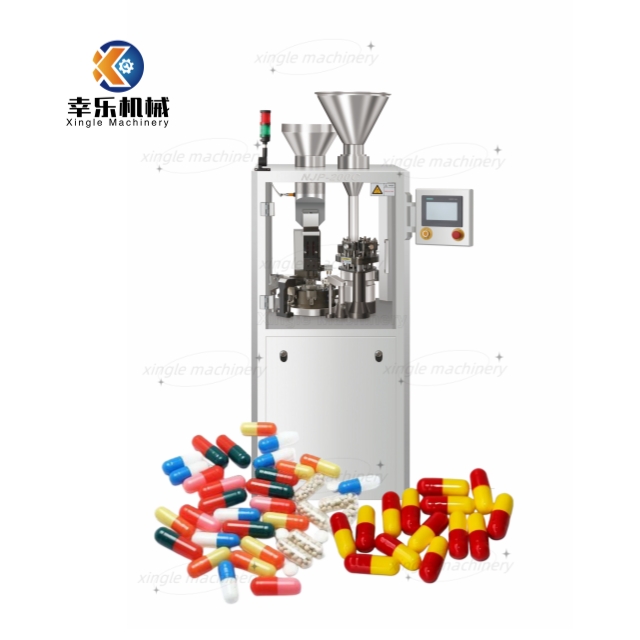
Empty gelatin capsules are more than just a packaging material—they’re essential in pharmaceuticals and supplements. Many people don’t realize how vital they are for effective dosing and easy consumption. In this article, we will explore their composition, manufacturing process, and the role capsule filling machines play in modern production. You’ll discover everything you may not know about empty gelatin capsules.
Gelatin capsules are small, cylindrical containers made from gelatin that are used to encapsulate active pharmaceutical ingredients (APIs) or dietary supplements. These capsules are typically composed of two parts: a body and a cap. The body holds the powdered or liquid contents, while the cap securely seals it.
Gelatin is derived from animal collagen, primarily from pork or beef sources. However, vegetarian capsules are also available, made from plant-derived cellulose.
Gelatin has several properties that make it the preferred choice for capsule production:
● Stability: Gelatin capsules offer a stable environment for the active ingredients inside, protecting them from moisture and degradation.
● Ease of Digestion: Gelatin dissolves quickly in the stomach, allowing for fast absorption of the contents.
● Cost-Effective: Compared to other capsule materials, gelatin is relatively inexpensive and widely available.
Here’s a quick comparison between gelatin capsules and vegetarian capsules:
Feature | Gelatin Capsules | Vegetarian Capsules |
Source | Animal (pork or beef) | Plant-based (cellulose) |
Dissolution Speed | Fast | Moderate |
Bioavailability | High | Moderate |
Cost | Lower | Higher |
Suitability | Common in mainstream markets | Suitable for vegetarians/vegans |
Gelatin capsules are favored in pharmaceutical and supplement industries because they effectively deliver a range of active ingredients, including powders, liquids, and oils, with minimal risk of leaking or disintegration.
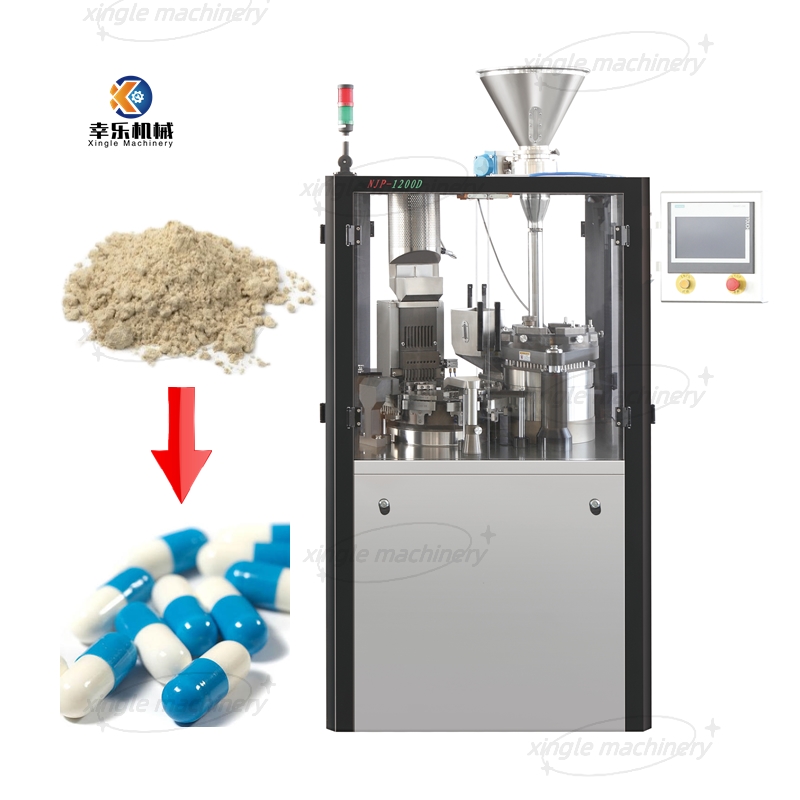
Capsule filling machines are essential tools in the mass production of empty gelatin capsules. These machines are designed to fill capsules with precise doses of active ingredients, such as powders or oils. The process involves several key stages:
1. Separation: Empty capsules are loaded into the machine, and the cap and body are separated.
2. Filling: The filling material, often a powdered substance, is measured and poured into the capsule body.
3. Assembly: After filling, the capsule cap is reattached, sealing the contents inside.
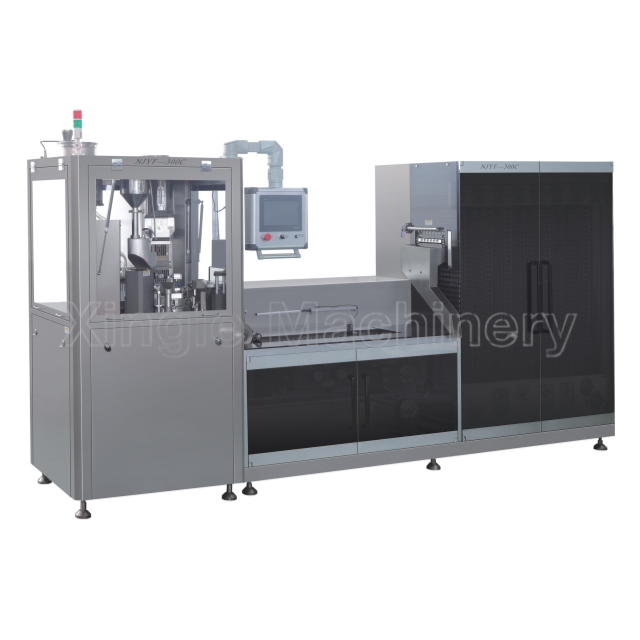
These machines can range from small-scale manual units to large-scale automatic machines, depending on the needs of the production facility.
The precise operation of capsule filling machines ensures that each capsule contains an accurate dose of active ingredient. This precision is critical, particularly in the pharmaceutical industry, where dosing errors can have serious consequences. Capsule filling machines are equipped with mechanisms to minimize air pockets and ensure uniformity in each capsule’s content, which is essential for consistency in both efficacy and safety.
Type of Machine | Best Suited For | Advantages | Disadvantages |
Manual Capsule Filling Machine | Small-scale production | Low cost, hands-on control | Labor-intensive, slower speed |
Semi-Automatic Capsule Filling Machine | Medium-scale production | Semi-automated, more efficient | Requires some manual input |
Fully Automatic Capsule Filling Machine | Large-scale production | High speed, minimal human input | Expensive, high maintenance |
The raw materials used in the production of gelatin capsules include high-quality gelatin, colorants, and stabilizers. The gelatin is sourced from animal bones or skin and is then processed to form a gel. This gel is used to create the capsule’s shell, while other ingredients like colorants and stabilizers are added for aesthetic purposes and to increase shelf life.
Capsule filling machines play a vital role in this process, as they ensure the efficient and hygienic filling of gelatin capsules with powders, liquids, or other substances.
The size and shape of the gelatin capsule are determined based on the type of contents it will hold. Capsules come in a variety of sizes, from small 00 capsules to larger ones used for bulkier formulations. The choice of capsule size depends on the dosage requirements and the volume of the substance being encapsulated.
Capsule filling machines are designed to accommodate different sizes, ensuring that the filling process is consistent regardless of the capsule's dimensions.
Gelatin capsules are often chosen over alternatives like softgels or vegetarian capsules because of their:
● Faster Dissolution Time: Gelatin capsules dissolve quickly in the stomach, allowing for faster absorption.
● Lower Production Costs: Gelatin capsules are less expensive to manufacture compared to other types, making them an ideal choice for high-volume production.
● Versatility: Gelatin capsules can be used for both powder and liquid formulations, unlike softgel capsules, which are primarily used for oils and liquids.
For consumers, gelatin capsules provide several benefits:
● Digestibility: Gelatin capsules dissolve easily in the stomach, leading to faster absorption of the active ingredients.
● Bioavailability: The body can more efficiently absorb the nutrients or medications contained in gelatin capsules.
● Transparency and Trust: Gelatin capsules are widely recognized and trusted by consumers, with clearly labeled ingredients.
While gelatin capsules are safe for most people, there are certain considerations:
● Vegetarian and Vegan Alternatives: Many people seek non-animal-based alternatives, such as cellulose capsules, due to dietary or ethical concerns.
● Religious Restrictions: Gelatin derived from pork or beef may not be suitable for people following religious dietary laws. In these cases, vegetable-based capsules are a viable option.
Gelatin is biodegradable, but its production involves animal byproducts, which raises concerns for some consumers. In response, the industry is developing more eco-friendly options, including plant-based capsules.
Advances in capsule filling machines have also led to more energy-efficient manufacturing processes, helping to reduce the environmental impact of gelatin capsule production.
Gelatin capsules are not limited to dietary supplements. They are increasingly used in pharmaceutical applications, including controlled-release drug delivery systems. These capsules can be engineered to release their contents at a specific time or rate, improving the effectiveness of certain medications.
Ongoing research is exploring new ways to enhance the efficacy and versatility of gelatin capsules. Advances in capsule filling machines are also playing a significant role in these innovations, allowing for greater precision and the development of specialized capsule types for specific medical conditions.
When selecting a capsule filling machine, consider factors such as:
● Production Volume: Choose a machine that matches your production capacity, whether you are a small-scale manufacturer or a large enterprise.
● Customization Features: Depending on the types of capsules and filling materials used, the ability to customize the machine is essential.
To ensure optimal performance, regularly maintain your capsule filling machines. This includes cleaning the machines to avoid contamination and checking for wear on essential parts. Preventative maintenance helps extend the machine’s lifespan and ensures consistent product quality.
Empty gelatin capsules have an undeniable importance in modern manufacturing, particularly within the pharmaceutical and supplement industries. Their ability to encapsulate active ingredients effectively, coupled with the precision of capsule filling machines, makes them an indispensable part of production. As demand grows for both pharmaceutical and dietary products, understanding the role of gelatin capsules and the machines that fill them is key to delivering high-quality, reliable products. Whether you're producing supplements or medications, it's crucial to choose the right equipment and materials to ensure consistency and effectiveness. At Xingle, we specialize in providing top-notch capsule filling machines and gelatin capsules, ensuring your production meets the highest standards of quality.
A: Empty gelatin capsules are made from gelatin, which is derived from animal collagen, typically sourced from beef or pork. They are commonly used to encapsulate powders, liquids, or other ingredients in the pharmaceutical and dietary supplement industries. Capsule filling machines are used to automate the process of filling these capsules.
A: Empty gelatin capsules are filled using a capsule filling machine. The machine accurately measures and fills the capsules with powders or liquids, ensuring each capsule contains the correct dosage. This process can be automated or manual, depending on the scale of production.
A: Gelatin capsules are preferred because they dissolve quickly in the stomach, providing faster absorption of the active ingredients. They are also cost-effective, versatile, and widely accepted by consumers. Capsule filling machines ensure precision and consistency in manufacturing gelatin capsules.
A: Gelatin capsules offer benefits such as fast digestion, high bioavailability, and versatility in holding various types of formulations. They are commonly used in supplements because they are easy to digest and provide an efficient way to deliver active ingredients. Capsule filling machines help ensure consistent quality.


