 English
Views: 0 Author: Site Editor Publish Time: 2026-01-13 Origin: Site


Are you looking for a solution to enhance the precision and efficiency of your powder filling processes? Auger filling machines are the answer. These machines are designed to handle a variety of powder types, offering exceptional accuracy for industries like food, pharmaceuticals, and chemicals.
In this article, we will explore the key aspects of auger filling machine design, focusing on how they improve powder filling accuracy and efficiency. You will learn about the important features and considerations when designing a powder filling machine.
An auger filling machine operates by using a rotating auger screw to transfer powder or granular materials from a hopper into containers. The auger screw, with its helical design, moves the product from the hopper to the filling station. The speed and rotation of the auger control the amount of material dispensed, ensuring precise, volumetric dosing.
This method is particularly effective for powders that are dry, fine, or have a tendency to clump. The auger’s design, including the pitch and diameter of the screw, plays a critical role in the volume of powder dispensed with each rotation, making it suitable for high-precision filling applications.
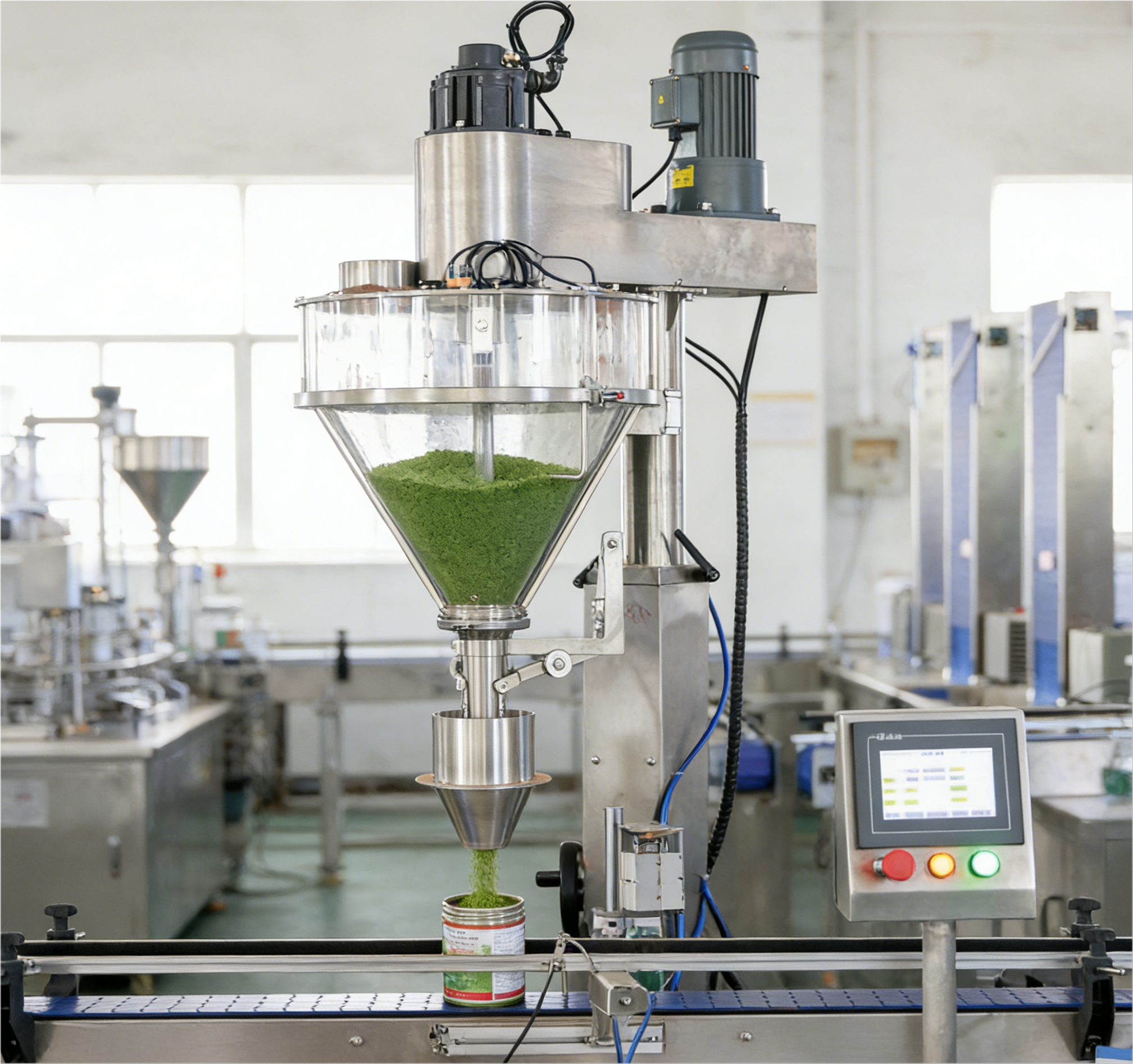
The auger filling machine consists of several key components that work together to ensure efficient and precise powder filling.
Component | Function | Design Considerations |
Hopper | Stores the bulk material and ensures consistent flow into the auger. | Conical shape, may include agitators or vibrators for non-free-flowing powders. |
Auger Screw | Moves and meters the product from the hopper into the container. | Customizable pitch, diameter, and flight design based on powder characteristics. |
Motor Drive System | Powers the auger screw and controls its rotation speed. | Servo motors provide precision for consistent dosing. |
Control Panel | Manages machine settings, including speed, volume, and cycle times. | Typically PLC-based, offering a user-friendly interface for adjustments. |
Volumetric dosing ensures that a precise amount of powder is dispensed into containers. In auger filling machines, this is achieved by using a rotating auger screw. Each time the auger rotates, it moves a consistent volume of powder from the hopper to the filling station. The number of auger rotations and the auger’s speed are adjustable, providing flexibility to handle different powders and fill sizes.
This method is especially useful for powders with consistent flow characteristics. By controlling the auger’s rotation, volumetric dosing minimizes variation in the amount of material dispensed, improving accuracy and reducing product waste.
Key Benefits of Volumetric Dosing:
● Precision: Delivers accurate and consistent fill volumes.
● Adjustability: Allows flexibility to meet specific product requirements.
● Efficiency: Reduces waste by preventing overfilling or underfilling.
Effective product flow management is crucial for maintaining the efficiency of an auger filling machine. Powders that are prone to clumping or have poor flowability can lead to issues like "rat-holing" and "bridging," which disrupt the filling process.
● Rat-holing occurs when powder falls through the center of the hopper, leaving an empty space that prevents proper flow.
● Bridging happens when powder clogs at the outlet, blocking the material from moving into the auger.
To address these issues, auger filling machines are equipped with components such as agitators and vibrators. These devices help maintain a continuous flow of material, ensuring that the auger screw is consistently fed.
Tool | Function | Benefit |
Agitators | Rotate to stir the powder in the hopper, preventing product buildup. | Keeps material evenly distributed for smooth flow. |
Vibrators | Dislodge clumps and break up bridging in the hopper. | Reduces the risk of clogs and ensures consistent filling. |
How Agitators and Vibrators Improve Flow:
● Agitators: Ensure that the powder is uniformly mixed and prevent rat-holing.
● Vibrators: Help break up compacted powders, preventing bridging and maintaining flow consistency.
By addressing these flow management challenges, auger filling machines ensure smooth and reliable operation, even when handling powders with varying characteristics. This helps reduce downtime and increases overall filling efficiency.
The design of auger filling machines must be highly adaptable to accommodate various product characteristics and container sizes. The auger screw’s design, including its pitch, diameter, and the number of flights, can be customized based on the powder's flowability, particle size, and density. This customization ensures optimal performance, whether the product is free-flowing or non-free-flowing.
Free-flowing powders, such as salt or granulated sugar, can be easily moved by the auger without issues. However, powders like flour or protein powder, which have poor flow characteristics, may require special auger designs to manage their movement. For these types of products, auger fillers often incorporate larger auger flights or additional components, such as agitators, to improve material flow and avoid blockages.
In addition to accommodating different powders, the machine must also adapt to various container sizes. Auger filling machines are designed with adjustable tooling, such as funnels and hoppers, to easily switch between different packaging formats. This flexibility ensures that the same machine can fill a range of containers, from small pouches to large industrial bags, while maintaining high accuracy and efficiency.
● Customization for Flowing Powders: Adjusting auger screw design to suit free-flowing or non-free-flowing materials.
● Adaptable Tooling: Changing funnels and hoppers to accommodate different container sizes and product volumes.
● Improved Flow: Use of larger flights or agitators for challenging powders to maintain smooth dispensing.
Hygiene is a crucial factor in the design of auger filling machines, especially in industries such as food, pharmaceuticals, and chemicals, where cleanliness and safety are paramount. Materials used for constructing the machine must meet industry-specific standards, such as food-grade and pharmaceutical-grade requirements. Stainless steel, particularly 304 and 316L grades, is commonly used for contact parts due to its durability, corrosion resistance, and ease of cleaning.
To maintain hygiene, the design of auger filling machines includes features that allow for easy disassembly and cleaning. Split hopper designs, for example, are often employed to facilitate quick access to the interior components for cleaning. Additionally, quick-release clamps are used to minimize downtime and simplify maintenance, making it easier for operators to perform routine cleaning without disassembling complex parts.
The ability to easily clean and sanitize auger filling machines is essential to prevent cross-contamination, maintain product integrity, and comply with industry regulations.
Feature | Benefit |
304/316L Stainless Steel | Corrosion-resistant and durable for safe food-grade and pharmaceutical applications. |
Split Hopper Design | Allows for quick disassembly, enabling easier cleaning and maintenance. |
Quick-Release Clamps | Minimizes downtime and ensures efficient cleaning between production runs. |
Servo motors play a crucial role in enhancing the accuracy of powder filling machines. These motors offer precise control over the speed and rotation of the auger screw, which is essential for maintaining consistent dosing. By adjusting the motor speed, operators can ensure that the auger dispenses the exact amount of powder required for each cycle. The precision provided by servo motors reduces variations in filling volume, which is critical when working with fine powders or when accuracy is a top priority, such as in the pharmaceutical or food industry.
In addition to servo motors, check-weighing systems are integrated into auger filling machines to further improve accuracy. These systems provide real-time feedback on the weight of the product being filled, allowing for adjustments during the filling process. If the weight deviates from the preset target, the system automatically adjusts the filling process to correct the discrepancy, ensuring that each container receives the correct amount of product. This integration minimizes overfilling and underfilling, which helps reduce material waste and ensures compliance with strict regulatory standards.
● Servo Motors: Offer precise control over auger speed for consistent dosing.
● Check-Weighing Systems: Provide real-time weight feedback for immediate adjustments.
● Accuracy: Reduces filling errors and waste, ensuring consistent results.
The design of the auger screw itself plays a significant role in the accuracy of powder filling. Customizing the auger screw dimensions, such as pitch and diameter, is essential depending on the characteristics of the powder being filled. For example, free-flowing powders may require a different auger design compared to non-free-flowing powders, which are more prone to clumping.
The pitch of the auger refers to the distance between the screw threads. A smaller pitch is typically used for fine powders, as it allows for more precise control over the material flow. Conversely, powders with larger particles or granules may benefit from a wider pitch to accommodate larger volumes of material with less risk of clogging.
The diameter of the auger screw also impacts the fill accuracy. A larger diameter auger can move more powder at once, but it may sacrifice precision. A smaller diameter auger offers greater control, especially when dealing with powders that have a tendency to shift or settle during the filling process.
Auger Design Factor | Effect on Accuracy | Best Use Case |
Pitch | Controls the amount of material moved with each rotation. | Small pitch for fine powders, larger pitch for granular materials. |
Diameter | Affects the volume moved and the speed of dispensing. | Smaller diameter for precise, controlled dispensing. |
Flight Design | Impacts how evenly the powder is dispensed. | Single flight for uniform filling, double flight for more efficient flow in coarse powders. |
Customizing the auger screw based on the product’s characteristics ensures a consistent, accurate fill, improving both operational efficiency and product quality. Properly tailored auger screw designs help prevent common issues such as inconsistent fill volumes and product wastage, making it a vital consideration in the overall design of powder filling machines.
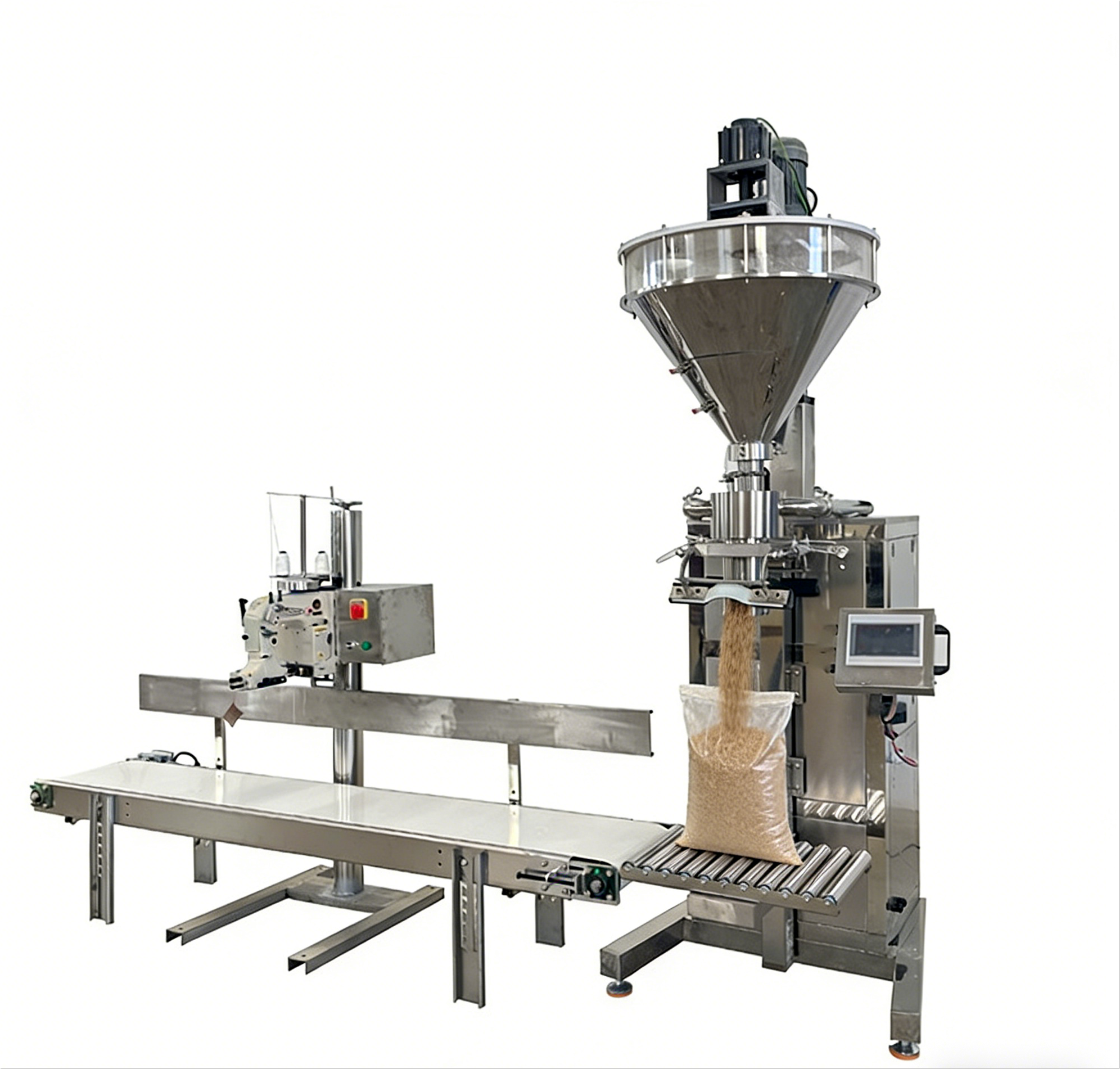
Auger filling machines offer several key advantages in powder filling applications, making them a popular choice for industries that require high precision and efficiency. One of the main benefits is their high precision. The auger mechanism ensures that a specific volume of powder is dispensed with each rotation, minimizing overfill and underfill issues. This precision is crucial for applications like pharmaceuticals and food processing, where product consistency is vital for both regulatory compliance and consumer satisfaction.
Another advantage is efficiency. Auger fillers can handle high-volume production while maintaining accuracy, reducing downtime and increasing throughput. The ability to adjust the auger speed and the number of rotations allows for flexibility in filling various container sizes and different powder types, ensuring a smooth, uninterrupted production process. This efficiency makes auger fillers ideal for operations that require continuous filling with minimal human intervention.
● High Precision: Ensures accurate dosing, reducing product waste and improving quality.
● Efficiency: Suitable for high-volume operations, allowing for faster filling times.
● Versatility: Can handle a wide range of powder types and container sizes.
Additionally, auger filling machines are equipped with dust control features, which are essential for powders that tend to become airborne during the filling process. The enclosed design of auger machines minimizes dust emissions, creating a safer and cleaner working environment. This is particularly important in cleanroom environments, such as in the pharmaceutical industry, where contamination control is critical.
The hygienic design of auger fillers further enhances their appeal. Many auger machines are constructed from materials like 304 and 316L stainless steel, ensuring they meet stringent food-grade and pharmaceutical standards. Features such as split hopper designs and quick-release clamps allow for easy cleaning and maintenance, which reduces the risk of contamination between production runs.
Feature | Benefit |
Dust Control | Reduces airborne particles, creating a safer and cleaner work environment. |
Hygienic Design | Stainless steel components and easy-to-clean features ensure compliance with industry standards. |
Enclosed Systems | Minimizes contamination and dust exposure during the filling process. |
Auger filling machines are essential for achieving high precision and efficiency in powder applications. Their design principles, including volumetric dosing and customizable auger screw dimensions, ensure consistent and accurate filling. Choosing the right auger filling machine design is crucial for meeting specific product needs, and Foshan Xingle Machinery Equipment Co., Ltd. offers reliable solutions that enhance both speed and accuracy, making them a trusted choice for industries like food and pharmaceuticals.
A: A powder filling machine is designed to dispense precise quantities of powder into containers. It works by using an auger screw mechanism that moves the powder from a hopper into the filling area, ensuring accurate volumetric dosing for various industries, including pharmaceuticals, food, and chemicals.
A: A powder filling machine is ideal for high-precision powder dispensing in continuous or batch processing environments. It is commonly used when accuracy, consistency, and speed are critical, such as in the packaging of pharmaceuticals, spices, or protein powders.
A: Factors such as the powder's flow characteristics, particle size, and density impact the performance of a powder filling machine. Customizing the auger screw and selecting appropriate tooling based on the product’s properties helps ensure efficient and accurate filling.
A: A powder filling machine improves efficiency by automating the filling process, reducing manual labor, and ensuring accurate dosing. It increases throughput, minimizes waste, and maintains consistent product quality, crucial for industries with high-volume production.
A: Regular maintenance for a powder filling machine includes cleaning the hopper and auger, checking for wear on components like the auger screw, and calibrating the system. Proper maintenance extends the machine's lifespan and ensures reliable, consistent performance.


