 English

Views: 0 Author: Site Editor Publish Time: 2025-11-28 Origin: Site


Did you know that improper cleaning is one of the leading causes of capsule contamination in pharmaceutical production? According to a 2023 industry report, over 35% of production delays in pharmaceutical manufacturing are traceable to equipment maintenance issues — with cleaning protocols topping the list.
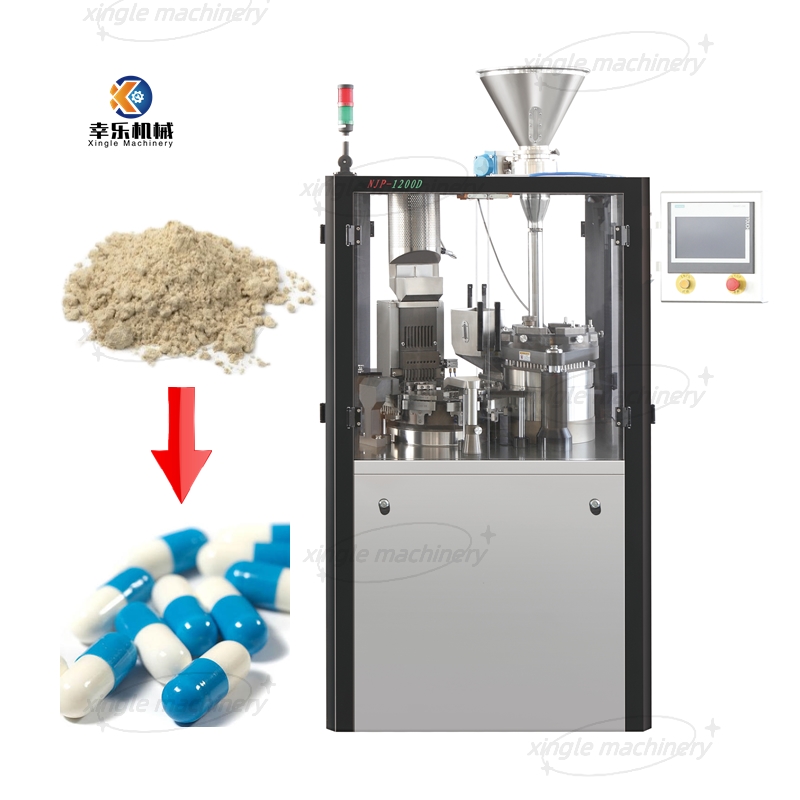
An automatic capsule filling machine is a cornerstone of modern pharmaceutical and nutraceutical production. These machines enable manufacturers to fill thousands of hard gelatin or vegetable capsules per hour with precise doses of powders, granules, or pellets. However, the efficiency and accuracy of an automatic capsule filling machine depend heavily on one crucial factor — cleanliness.
In this post, you'll learn why, when, and how to clean your automatic capsule filling machine properly. We'll also delve into the tools and supplies needed, provide a step-by-step cleaning guide, explore deep cleaning protocols, and highlight common cleaning mistakes to avoid. Whether you're operating a NJP-1200, NJP-400, or any other model, this guide is tailored to help you maintain top-notch performance and ensure compliance with GMP standards.
Regular and thorough cleaning of your automatic capsule filling machine is not just a preventive maintenance task — it is a critical quality control measure. Proper cleaning ensures:
Product safety and integrity
Extended machine life
Reduced cross-contamination
Compliance with GMP and FDA guidelines
Failing to implement a proper cleaning routine can lead to machine failure, regulatory non-compliance, and expensive downtime.
Cleaning frequency depends on the type of product being processed, machine usage, and GMP compliance requirements. Below is a table indicating when to clean:
| Situation | Cleaning Type | Frequency |
|---|---|---|
| After Each Production Batch | Routine Cleaning | After each run |
| Change of Product Formula | Deep Cleaning | Before switch |
| Weekly Maintenance | Intermediate | Weekly |
| Monthly Sanitation Audit | Full Sanitation | Monthly |
| Visible Residue or Malfunction | Immediate Cleaning | As needed |
Key triggers for cleaning include:
Change in capsule size (e.g., from 0# to 1#)
Change in ingredients (especially from herbal to chemical)
Extended machine downtime
End-of-shift protocols
Before starting, gather all necessary cleaning tools and materials. Use only GMP-compliant and non-corrosive cleaning agents.
Soft nylon brushes (various sizes)
Lint-free wipes
Vacuum cleaner (industrial, HEPA-filtered)
Compressed air gun
Food-grade detergents
70% isopropyl alcohol
Disinfectant spray
Protective gloves, goggles, and apron
Tool kit (for accessing internal components)
Make sure all cleaning agents and tools are compatible with stainless steel and do not leave residues.
Here's a comprehensive procedure to clean your automatic capsule filling machine, suitable for models such as NJP-400, NJP-1200, and similar variants from Xingle Machinery.
Turn off the main power supply.
Disconnect the machine from the power source.
Wait until all moving parts have stopped completely.
Remove the hopper, dosing disk, tamping pins, capsule separator, and filling stations.
Refer to the product manual for your specific model (e.g., NJP-400 or NJP-1200).
Use a vacuum to remove residual powders and granules.
Blow compressed air into tight corners, especially around dosing disks and filling shafts.
Use a soft brush and food-grade detergent to scrub the removable parts.
Rinse with distilled water.
Wipe with lint-free cloths soaked in 70% isopropyl alcohol.
Clean internal surfaces using alcohol-soaked wipes.
Spray all cleaned parts with GMP-approved disinfectant.
Let them air dry in a cleanroom environment, preferably on a sanitized surface.
Visually inspect all parts for signs of residue, rust, or damage.
Reassemble starting with the hopper, filling mechanisms, and capsule feeder.
Calibrate the machine before testing.
Update the cleaning log with date, time, personnel, and cleaning details.
Maintain records per GMP documentation standards.
While daily cleaning ensures basic hygiene, deep cleaning is essential at regular intervals or during product changeovers.
Monthly or quarterly (based on usage)
After processing sticky or oily materials
Before switching from herbal to pharmaceutical products
After prolonged shutdowns
| Part | Cleaning Method | Frequency |
|---|---|---|
| Dosing Disk | Ultrasonic cleaning bath | Monthly |
| Capsule Feeding Mechanism | Full disassembly and alcohol sterilization | Monthly |
| Vacuum System | Filter change and internal wipe | Bi-weekly |
| Electrical Panel | Dust-free vacuum and inspection | Monthly |
Deep cleaning may require professional services or OEM support, especially for intricate models offered by Xingle Machinery.
Avoiding these mistakes can save your company from costly delays and potential product recalls:
Skipping dry cleaning before wet cleaning — leads to paste formation.
Using tap water — which may leave mineral residues.
Not disassembling key components — causes hidden contamination.
Mixing tools across machines — high risk of cross-contamination.
Using abrasive materials — can damage stainless steel surfaces.
Improper drying — creates a perfect environment for microbial growth.
Inadequate documentation — violates GMP principles.
Cleaning your automatic capsule filling machine is not merely a routine — it's a vital practice that ensures compliance, product safety, and machine longevity. Whether you're running a compact NJP-400 or a high-output NJP-1200, the principles remain the same: clean frequently, clean correctly, and document thoroughly.
As new materials, capsule formulations, and machine models evolve, cleaning protocols must also adapt. Partnering with manufacturers like Xingle Machinery. ensures access to custom cleaning guidelines and OEM support tailored to your equipment.
If you're planning to scale your production, consider investing in machines with easy-clean design features, such as touch screen interfaces, modular components, and tool-free disassembly — all available in Xingle Machinery's latest models.
At a minimum, after every production batch. Perform deep cleaning monthly or when switching products.
No. Use only distilled water on compatible parts and avoid water near electronic or motorized components.
Routine cleaning takes 30–60 minutes. Deep cleaning may take 2–4 hours depending on the model.
Yes, apply GMP-approved lubricants to moving parts as specified in the user manual.
Use food-grade detergents, 70% isopropyl alcohol, and non-corrosive disinfectants.
Absolutely. Harsh chemicals, abrasive tools, or moisture retention can lead to corrosion and mechanical failure.
Yes. All personnel should be trained in SOPs, GMP compliance, and machine-specific protocols.


