 English

Views: 0 Author: Site Editor Publish Time: 2025-11-25 Origin: Site


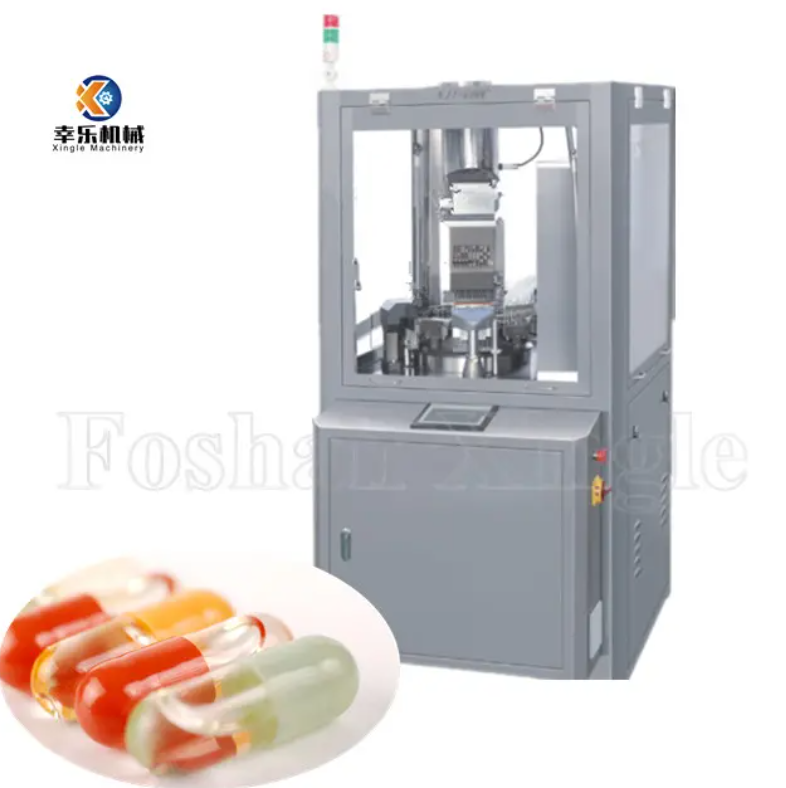
Did you know that the global demand for liquid-filled capsules is expected to grow at a CAGR of 7.2% by 2030? As pharmaceutical and nutraceutical companies race to deliver more effective, bioavailable, and stable formulations, liquid encapsulation solutions are taking center stage. From fish oil supplements to CBD formulations and complex pharmaceutical compounds, liquid capsule technology is rapidly transforming the encapsulation industry.
But what exactly makes liquid hard capsules superior? And how do modern capsule filling machines ensure precision, speed, and compliance in large-scale production?
In this post, you'll learn everything you need to know about liquid hard capsule filling technology—from its benefits and process workflow to the types of automatic capsule filling equipment powering the industry today. We'll also dive deep into capsule sealing technology, production challenges, market trends, and how to select the best machinery for your needs.
Let's start by summarizing what you'll take away from this comprehensive guide.
Liquid hard capsule filling improves bioavailability, stability, and versatility for complex formulations.
Modern capsule filling machines offer automation, precision, and scalability.
Understanding the full filling workflow and selecting the right equipment is essential for GMP-compliant production.
New technologies in liquid capsule technology and sealing are shaping the future of pharmaceutical capsule filling.
This guide includes comparisons, data insights, and tips to help manufacturers choose the best liquid hard capsule filling machine.
Liquid-filled hard capsules are two-piece gelatin or HPMC capsules filled with liquid or semi-solid formulations. Unlike traditional powder-filled capsules, these allow for the encapsulation of:
Oil-based ingredients (e.g., omega-3, MCT)
Suspensions and emulsions
Heat-sensitive APIs
Liquid nutraceuticals
These capsules consist of a body and cap, which are sealed after the liquid capsule filling process using advanced capsule sealing technology to prevent leakage.
| Industry | Products Encapsulated |
|---|---|
| Pharmaceuticals | Hormones, antibiotics, controlled-release drugs |
| Nutraceuticals | Fish oil, CBD oil, herbal extracts |
| Cosmetics | Active cosmetic ingredients in capsule form |
| Veterinary | Pet supplements and medications |
Why are more manufacturers switching to liquid capsule technology? Here are the top benefits:
Liquids are absorbed faster and more efficiently by the body compared to powders. This is especially important for fat-soluble or poorly soluble compounds.
With proper capsule sealing technology, sensitive ingredients can be protected from oxidation, moisture, and light.
Unpleasant tastes or odors can be locked inside the capsule, improving customer compliance.
Allows manufacturers to combine multiple active ingredients in one dose—both hydrophilic and lipophilic.
Properly sealed capsules reduce the risk of tampering and contamination.
Liquid capsules can be produced using automatic capsule filling equipment, increasing output and reducing labor.
At the heart of liquid encapsulation solutions is the liquid hard capsule filling machine. These machines automate the following steps:
Capsule separation
Accurate liquid dosing
Capsule rejoining
Sealing
| Machine Type | Description |
|---|---|
| Semi-Automatic Liquid Capsule Filling Machine | Ideal for small-scale or pilot productions. Requires manual capsule loading. |
| Automatic Liquid Capsule Filling Machine | Fully automated with high output, suitable for large-scale operations. |
| Integrated Capsule Filling and Sealing Line | Combines filling, sealing, and inspection in one line for higher efficiency. |
High-speed filling (up to 25,000 capsules/hour)
Servo-driven piston pumps for precise dosing
Touchscreen HMI for easy operation
GMP-compliant stainless steel design
Real-time monitoring and data logging
Understanding the capsule filling process helps ensure quality and compliance. Here's a step-by-step overview:
Capsule Orientation and Separation
Capsules are oriented and the cap is separated from the body.
Liquid Dosing
A metering pump precisely fills the capsule body with the liquid formulation.
Capsule Rejoining
The filled capsule body is re-capped.
Sealing
Using capsule sealing technology (e.g., banding, ultrasonic sealing), capsules are sealed to prevent leakage.
Drying and Inspection
Sealed capsules are dried, then inspected for weight, fill level, and sealing integrity.
Capsule Separation → Liquid Filling → Re-Capping → Sealing → Drying → Inspection → Packaging
Despite the advantages, liquid capsule production comes with specific challenges:
Improper sealing may cause leakage during storage or transport.
Not all liquids are compatible with gelatin or HPMC shells.
High-viscosity liquids require specialized pumps and temperature control.
Hygiene is critical. Clean-in-place (CIP) systems are often needed.
Advanced automatic capsule filling equipment can be capital-intensive.
Choosing the right liquid hard capsule filling machine depends on several factors:
| Factor | Recommendation |
|---|---|
| Production Capacity | Choose high-speed automatic models for large batches. |
| Formulation Viscosity | Ensure the machine can handle your product's viscosity with proper dosing. |
| Capsule Size Compatibility | Check supported sizes (00, 0, 1, etc.). |
| Sealing Technology | Opt for machines with ultrasonic or band-sealing features. |
| Compliance Standards | Ensure GMP, FDA, CE certifications. |
| After-Sales Support | Choose a supplier offering training, maintenance, and spare parts. |
The liquid capsule technology landscape is evolving rapidly. Here's what to expect:
Smart sensors and AI will optimize fill accuracy, reduce waste, and predict maintenance.
Eco-friendly capsule materials and solvent-free sealing methods are gaining traction.
Micro-batch filling machines will support customized dosages for individual patients.
Modern pharmaceutical capsule filling lines integrate seamlessly with manufacturing software for real-time monitoring.
Liquid hard capsule filling technology is revolutionizing how we deliver complex formulations in both pharmaceutical and nutraceutical industries. With enhanced bioavailability, sealing security, and the ability to create multi-ingredient capsules, the demand for liquid encapsulation solutions is only going to rise.
By understanding the capsule filling process, machinery, and challenges, manufacturers can make informed decisions that enhance product quality, regulatory compliance, and operational efficiency.
Whether you're upgrading a legacy production line or entering the market for the first time, choosing the right liquid hard capsule filling machine is crucial for long-term success.
Softgels are made from a single piece of gelatin and are typically more expensive to produce. Liquid hard capsules are made from two parts and offer easier scalability and cost efficiency.
Yes. Many liquid capsule filling machines are designed to handle oil-based and high-viscosity liquids.
Common methods include band sealing, ultrasonic sealing, and thermal sealing, each with different applications.
Use high-quality capsule sealing technology and ensure the capsule shell is compatible with your formulation.
Look for GMP, FDA, CE, and ISO certifications to meet global regulatory standards.


